What a makhana cookie really is
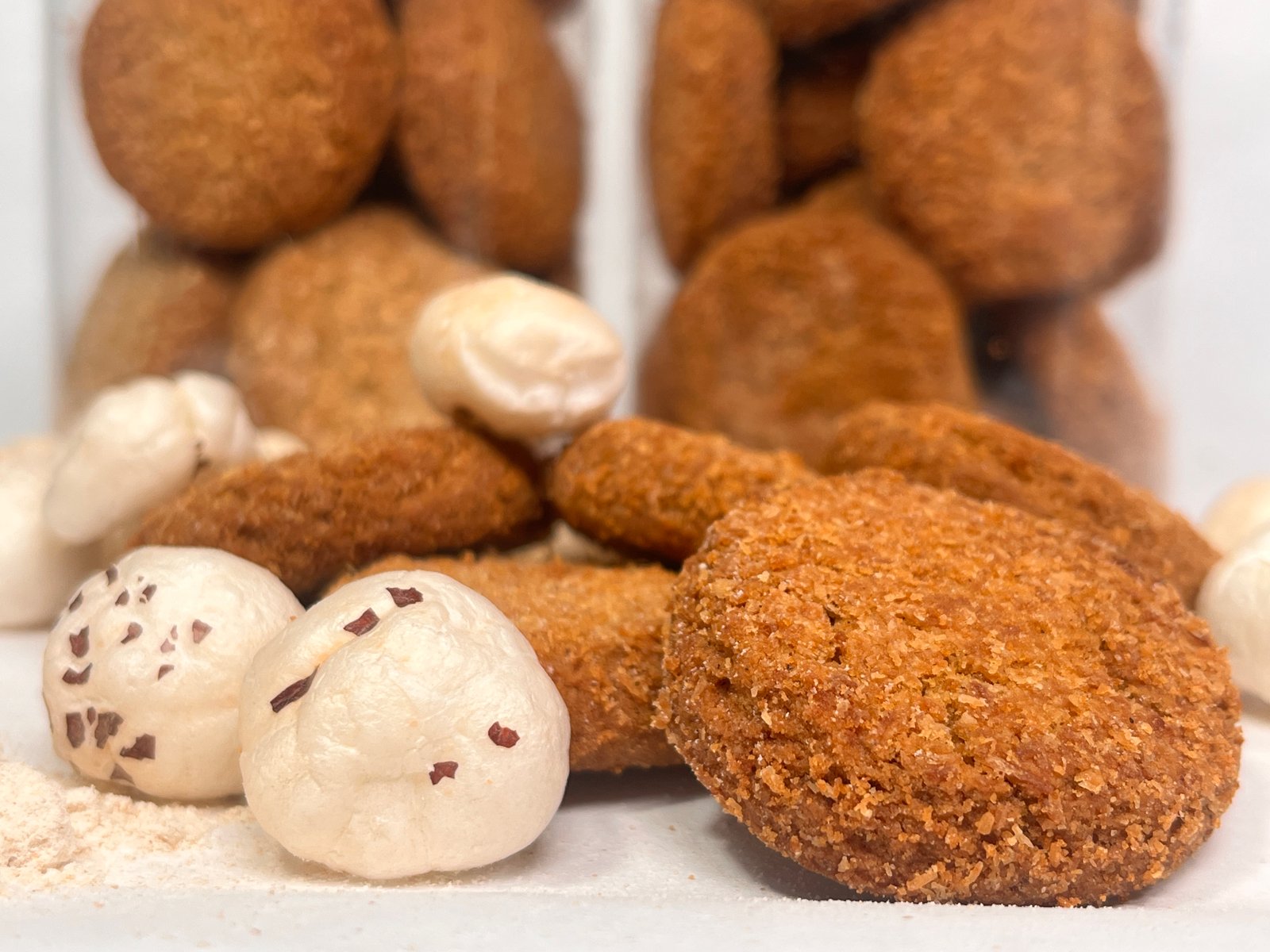
A makhana cookie is a baked biscuit that uses makhana — the puffed seed of Euryale ferox, the prickly water lily — as a functional ingredient, usually milled into flour or folded in as crunchy pieces, alongside the normal cookie base of flour, fat and a sweetener.
In one line: it’s a conventional cookie where some of the flour or inclusion is replaced by popped makhana, giving a lighter crunch and letting the brand tell a “better-for-you” ingredient story.
Two things are worth getting straight at the start, because both get lost in marketing copy.
First, makhana is a seed, not a nut. Despite the English name “fox nut,” Euryale ferox is a water-lily seed with no botanical relationship to peanuts or tree nuts. That matters more than it sounds, and we’ll come back to it under allergens.
Second, the makhana doesn’t do the heavy lifting on nutrition once it’s in a cookie. Popped makhana on its own is low in fat and naturally gluten-free, which is why it’s marketed as a functional snack. But a cookie also contains butter or oil, sugar, and usually wheat flour. The finished nutritional and allergen profile belongs to the whole recipe, not to the headline ingredient. An honest supplier will tell you that; it’s the difference between a real spec and a wellness slogan.
“Fox nut” is not a nut — what that means for your allergen label
Because makhana is sold as “fox nut,” buyers sometimes assume it triggers nut-allergen labelling. It doesn’t.
Under the EU and UK food information rules (Regulation (EU) 1169/2011 and its GB equivalent), there are 14 allergens that must be declared — including peanuts and tree nuts. Makhana is neither. It’s a water-lily seed, botanically unrelated to the regulated tree nuts, so the ingredient itself is not one of the 14 you’re required to emphasise.
Two caveats keep this accurate rather than convenient:
- The cookie’s allergens come from everything else. A typical makhana cookie contains wheat (gluten) and often milk, egg, or genuine tree nuts. Those must be declared. So the finished product is very often not allergen-free — the makhana just isn’t the reason.
- “Gluten-free” is a recipe decision, not a property of makhana. Makhana on its own is gluten-free, but a cookie made with wheat flour is not. If you want to sell a gluten-free makhana cookie, it has to be formulated gluten-free and manufactured to control cross-contact. Ask for it explicitly; don’t infer it from the hero ingredient.
Getting this right is a small thing that signals a serious buyer. It also protects you: a mislabelled allergen is one of the fastest ways to trigger a recall. Conclusion
Makhana cookies are one of the more genuinely interesting entries in the “ancient ingredient, modern snack” category — a puffed water-lily seed that behaves like a crunch, carries a real provenance story, and now has a documented route into the EU market.
But the reason the smart buyers move slowly isn’t doubt about the product. It’s that the useful questions are unglamorous: which form of makhana, cleared under which regulation, in which of the two now-separate UK and EU systems, with which allergens declared, on whose label. Answer those, and the taste-test at the trade show becomes the start of a real product rather than a nice sample you can’t ship.
If you’re weighing up the category, the most valuable thing you can do first isn’t to compare prices — it’s to write a spec sharp enough that every supplier has to answer the same real questions.